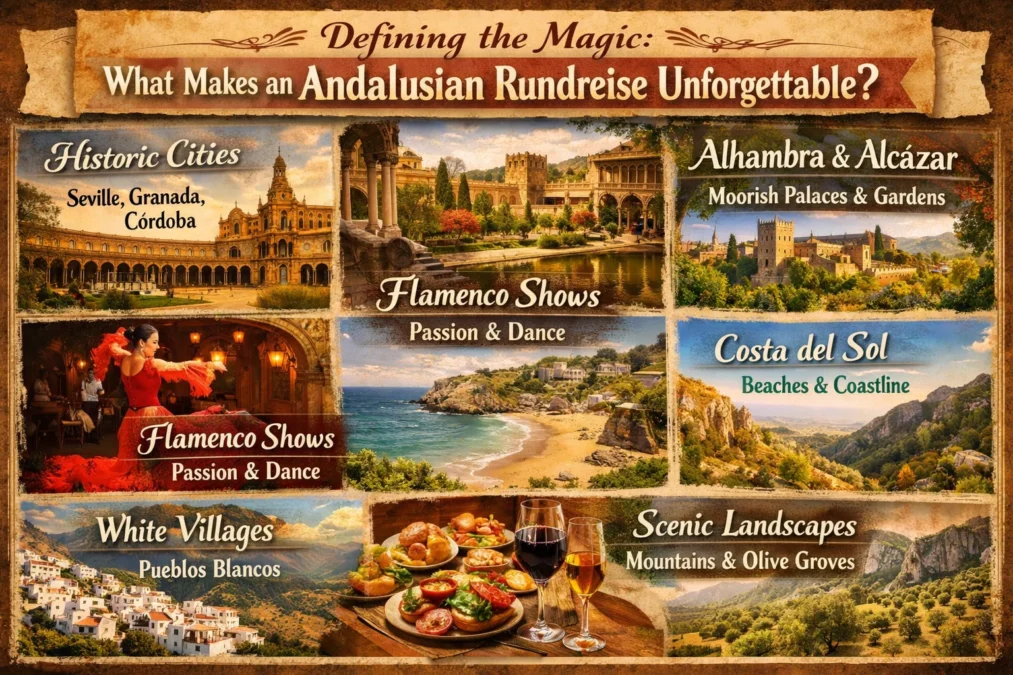

Andalusian Rundreise: What is it about an Andalusian Rundreise that captures the imagination so completely? The answer lies in its potent, almost overwhelming, concentration of contrasts. Nowhere else in Europe can you witness such a dramatic and beautiful fusion of cultural influences packed into one accessible region. Your journey will be a constant dialogue between East and West, between mountain and sea, between profound solemnity and explosive joy. One moment you’re standing in the awe-inspiring silence of the Mezquita in Córdoba, a forest of arches and columns that speaks of Islamic architectural genius. A few hours later, you could be watching the exuberant, sevillana-drenched procession of a local fería (festival) or tasting sherry in a Jerez bodega where the air is thick with the smell of aging wine. This is the rhythm of an Andalusian Rundreise: a constant, delightful shift between the monumental and the intimately human.
Furthermore, Andalusia is a region that is experienced best at your own pace. Unlike a single-city break, an Andalusien Rundreise grants you the freedom to connect the dots. You feel the landscape change as you drive from the alpine meadows of Granada’s Sierra Nevada to the desert-like badlands of Tabernas, Europe’s only desert. You taste the evolution of tapas from the sea-kissed fried fish of Cádiz to the hearty mountain stews of Jaén. This connective tissue—the roads winding through olive groves that stretch to the horizon, the sudden appearance of a cliff-top pueblo blanco (white village), the gradual change in dialect and custom—is the true essence of the trip. It transforms a series of destinations into a coherent, powerful story, with you as the protagonist navigating this sun-drenched tapestry.
Laying the Groundwork: Essential Planning for Your Andalusien Rundreise
A successful Andalusian Rundreise requires some thoughtful planning to match its ambition. First and foremost, timing is everything. The scorching heat of July and August can be oppressive, especially for extensive walking and driving. The sweet spots are undoubtedly spring (April to June) and autumn (September to October). During these months, the weather is gloriously warm and sunny, the countryside is either in bloom or harvest-rich, and the cultural calendar is packed with seminal events like Seville’s Feria de Abril, Córdoba’s Patio Festival, and Granada’s Corpus Christi celebrations. Winter, while cooler, offers its own charm with fewer crowds and the magical possibility of skiing in the Sierra Nevada while gazing down at the coast.
The next critical decision is transportation, and for a true Andalusien Rundreise, a rental car is non-negotiable. While high-speed trains connect major cities like Seville, Córdoba, and Málaga, the soul of the region lives in the villages and natural parks that are inaccessible by rail. A car grants you the freedom to follow whims—to detour to a recommended viewpoint, to spend an extra hour in a hidden village, or to chase the perfect sunset. Opt for a smaller vehicle for navigating the famously narrow streets of historic centers. When booking accommodation, consider a mix: perhaps a palatial parador (state-run hotel) for a night of history, a boutique hotel in a city center, and a charming rural villa (casa rural) in the mountains or countryside for a taste of authentic Andalusian life. Remember, your Andalusien Rundreise is a marathon, not a sprint—balance must be built into the itinerary.
The Classic Circuit: A Detailed 14-Day Andalusian Rundreise Itinerary
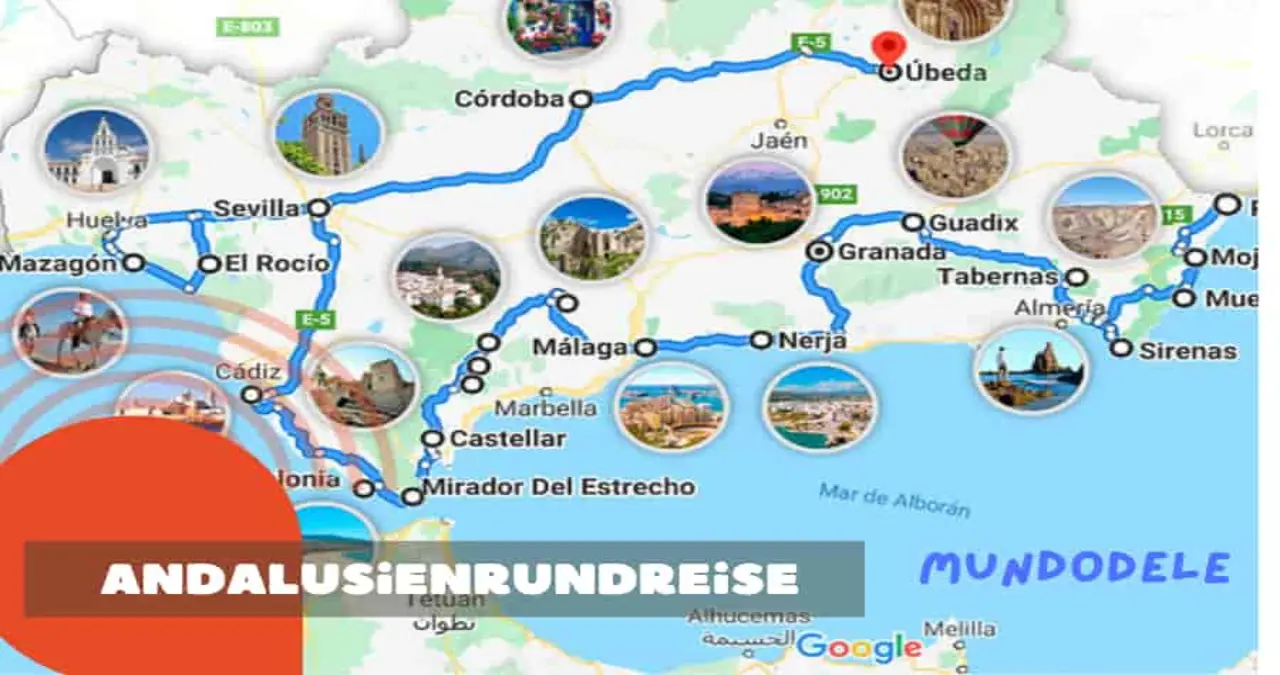
This proposed itinerary for your Andalusien Rundreise is a classic loop designed to capture the region’s greatest hits while allowing for depth and personal discovery. It assumes a start and end in Málaga, a major international airport with excellent rental car facilities.
Stage 1: Málaga & the Costa del Sol Gateway (2 Days)
Begin your Andalusian Rundreise by resisting the urge to flee Málaga immediately. This vibrant port city, Picasso’s birthplace, has transformed into a cultural hub. Spend a day exploring the formidable Alcazaba fortress, the Roman theatre, and the superb Picasso Museum. Stroll the lush gardens of the Palacio de la Concepción and sample fresh espetos de sardinas (sardine skewers) at a beachside chiringuito. This gentle introduction eases you into the Andalusian pace. On day two, take a short drive along the coast to the picturesque village of Mijas Pueblo, clinging to the mountainside, or head inland to the dramatic El Torcal de Antequera, a surreal limestone landscape. This initial phase of your Andalusien Rundreise combines urban energy with natural wonder.
Stage 2: The Majesty of Granada & the Alhambra (3 Days)
Drive north into the mountains, your destination: Granada. No Andalusien Rundreise is complete without this crown jewel. Reserve a full, unhurried day for the Alhambra and Generalife gardens. Book your tickets months in advance for a specific entry time to the Nasrid Palaces—this is non-negotiable. Wander the intricate palaces, fortresses, and gardens; this is the pinnacle of Moorish art in Europe. On your second day, lose yourself in the Albayzín, the old Moorish quarter, a labyrinth of white houses, cobbled lanes, and hidden cármenes (wall-villas with gardens). Cross the Darro River and explore the Sacromonte cave houses, the traditional home of Granada’s gitano (Romani) community and the birthplace of flamenco zambra. Cap each evening with the ritual: find a viewpoint in the Albayzín at sunset, watch the Alhambra turn crimson, and then enjoy free tapas with your drinks in a local tavern. Granada demands and deserves time on your Andalusian Rundreise.
Stage 3: Córdoba and Its Mezquita-Catedral (2 Days)
Depart Granada and head west across endless olive groves to Córdoba. The focal point here is the breathtaking Mezquita-Catedral. Prepare for a literal architectural shock: you walk from a typically Gothic cathedral nave into a hypnotic, seemingly infinite expanse of red-and-white striped arches. It’s a powerful symbol of Andalusia’s layered identity. Spend hours here. Afterwards, wander the surrounding Jewish Quarter (Judería), a maze of flower-bedecked lanes leading to the tranquil Patio de los Naranjos and the modest but poignant Synagogue. Time your Andalusien Rundreise in early May to witness the city’s famous Festival de los Patios, where residents open their private, flower-filled courtyards to the public. Cross the Roman bridge at dusk for a classic view of the Mezquita, beautifully illuminated.
Stage 4: The Heartbeat of Seville (3 Days)
Next, drive southwest to Seville, the region’s fiery, passionate capital. This city is the beating heart of any Andalusian Rundreise. Dedicate one day to the monumental complex of the Seville Cathedral (the world’s largest Gothic cathedral) and the adjacent Real Alcázar, a stunning Mudejar palace still used by the Spanish royal family. Climb the Giralda bell tower for panoramic views. On your second day, explore the grand Plaza de España in María Luisa Park and cross the river to the more bohemian Triana district, famed for its flamenco heritage and ceramic workshops. Your evenings in Seville should be spent savoring tapas in the Santa Cruz neighborhood (the old Jewish Quarter) and, if you’re lucky, catching an authentic flamenco show in an intimate tablao. Seville is a city to be felt as much as seen; let its energy infuse this leg of your Andalusien Rundreise.
Stage 5: The White Villages, Sherry, and the Atlantic (4 Days)
From Seville, strike south into the soul-stirring landscape of the Pueblos Blancos. Your first stop could be the stunning Arcos de la Frontera, perched precariously on a limestone cliff. Wind through the Parque Natural Sierra de Grazalema to villages like Grazalema itself or Zahara de la Sierra, postcard-perfect settlements with dazzling white houses and red-tiled roofs. Then, descend to Jerez de la Frontera, the home of sherry (or Jerez). Tour a traditional bodega like González Byass or Lustau to understand the solera system and enjoy a tasting. Your Andalusien Rundreise then reaches the sea at Cádiz, one of Europe’s oldest continuously inhabited cities. Feel the Atlantic breeze on its sea walls, explore its lively markets, and eat fantastically fresh seafood. Consider a final detour to the cliff-top sanctuary of Gibraltar for a unique perspective or to Tarifa, a windsurfing paradise with views of Africa, before looping back to Málaga via the scenic coastal route.
Diving Deeper: Beyond the Beaten Path on Your Andalusien Rundreise
While the classic circuit is magnificent, an Andalusian Rundreise offers infinite possibilities for deeper exploration. Consider these thematic detours to enrich your journey. For history buffs, the Roman ruins of Itálica near Seville (birthplace of emperors Trajan and Hadrian) are a vast, uncrowded amphitheater complex. In Córdoba province, the magnificent Medina Azahara, a ruined caliphal city, is a testament to Umayyad ambition. For nature lovers, venture beyond the Sierra de Grazalema to the Doñana National Park, a vast wetland at the mouth of the Guadalquivir River and a critical bird sanctuary. Or head to the Cabo de Gata-Níjar Natural Park in Almería, a volcanic, arid coastline with pristine beaches and a wild, almost lunar beauty.
For a different cultural rhythm, delve into the mining history and unique flamenco tradition of the Levante region around Almería. Explore the cave dwellings in Guadix and Purullena for a glimpse into a troglodyte lifestyle that persists today. Food and wine enthusiasts can design entire segments of their Andalusien Rundreise around specific routes: the Sherry Triangle (Jerez, Sanlúcar, El Puerto), the Montilla-Moriles wine region near Córdoba (producing similar but distinct wines), or the olive oil route in Jaén, where you can visit almazaras (oil mills) and taste the liquid gold of Andalusia. These diversions transform a great trip into a profoundly personal one.
The Soul of the Table: A Culinary Guide for Your Andalusian Rundreise
To travel through Andalusia without embracing its cuisine is to miss half of its soul. Your Andalusian Rundreise will be a movable feast, with each province offering its own specialties. Start with the basics: tapas. This is not just food; it’s a social institution. In Granada and Jaén, they’re often free with a drink. In Seville, you order a few different plates to share. Standouts include salmorejo (Córdoba’s thicker, richer cousin to gazpacho), espinacas con garbanzos (spinach with chickpeas), berenjenas con miel (fried eggplant with honey), and presa ibérica (a succulent cut of Iberian pork). Near the coast, indulge in pescaíto frito (mixed fried fish), gambas al ajillo (garlic shrimp), and ortiguillas (fried sea anemones, a Cádiz delicacy).
To navigate your culinary Andalusien Rundreise, use this simple table as a cheat sheet:
| Dish/Drink | Description | Where to Find It Best |
| Gazpacho | Chilled tomato & vegetable soup. | Ubiquitous, but summer in Seville is perfect. |
| Jamón Ibérico de Bellota | Acorn-fed Iberian ham, sliced paper-thin. | Anywhere, but a bar in Jabugo (Huelva) is the source. |
| Rabo de Toro | Oxtail stew, rich and slow-cooked. | A classic in Córdoba. |
| Huevos a la Flamenca | Baked eggs with chorizo, peas & peppers. | A hearty Seville staple. |
| Fino / Manzanilla | Dry, pale sherries, served chilled. | Jerez, Sanlúcar de Barrameda. |
| Vino de Naranja | Sweet, orange-infused dessert wine. | Traditional in Andújar and Condado de Huelva. |
As the celebrated Spanish poet Federico García Lorca, an Andalusian son, once wrote, “El agua no tiene peso donde beben los andaluces.” (“Water has no weight where Andalusians drink.”) This speaks to the region’s spirit of celebration and communal enjoyment, perfectly embodied in its tapas culture. Don’t just eat; engage. Order at the bar, ask the server for recommendations, and soak in the lively atmosphere. Your Andalusien Rundreise will be remembered as much by your taste buds as by your photos.
Embracing Tradition: Festivals and Cultural Etiquette
An Andalusian Rundreise can be magnificently timed to coincide with one of the region’s legendary festivals, transforming your trip into a participatory cultural event. The most famous is Seville’s Feria de Abril, a week-long explosion of color, music, and dance held two weeks after Semana Santa (Holy Week). Women wear elaborate flamenco dresses, men don traditional suits, and everyone dances sevillanas in private casetas (tents). It’s a spectacle like no other. In contrast, Córdoba’s Festival de los Patios in early May is an intimate celebration of domestic beauty, where private courtyards compete for prizes. Granada’s Corpus Christi features processions and a unique fair in the Alhambra forest. And the Romeria del Rocío in Huelva province sees over a million pilgrims traveling by horse and wagon to venerate a statue of the Virgin.
To navigate these events and daily life with respect, a few etiquette tips will enhance your Andalusien Rundreise. Spaniards eat late: lunch is typically 2-4 PM, and dinner is rarely before 9 PM (10 PM is common in summer). Adapt your schedule to avoid empty restaurants. A few basic Spanish phrases go a very long way—“por favor,” “gracias,” “buenos días.” While exploring historic centers, remember that people live in those beautiful white houses; be mindful of noise, especially during siesta (roughly 2-5 PM). Tipping is modest; rounding up the bill or leaving 5-10% in a sit-down restaurant is plenty. Most importantly, embrace the mañana mentality—things may not always run on a strict schedule, and that’s part of the charm. Patience and a relaxed attitude are your best travel companions.
Practical Travel Wisdom: Tips for a Smooth Andalusian Rundreise
Beyond the grand sights and flavors, a few practical insights will ensure your Andalusien Rundreise runs smoothly. Firstly, driving: while highways (autovías) are excellent and toll-free on most major routes, be prepared for narrow, winding roads in villages and mountain areas. Drive defensively, especially around roundabouts. Parking in city centers can be a challenge; research your hotel’s parking options in advance or use secure, paid parking garages (aparcamientos). For navigation, Google Maps or offline maps work very reliably. Secondly, money: while cards are widely accepted, small tapas bars and market stalls often prefer cash. Carry some euros with you.
Health and safety are generally excellent. The sun, however, is no joke. A high-SPF sunscreen, a hat, and sunglasses are absolute essentials, even in spring and autumn. Stay hydrated. In terms of packing, comfortable walking shoes are the single most important item—you will walk on cobblestones, climb towers, and explore vast palaces. Pack layers; evenings, especially in the mountains, can be cool. Finally, connectivity: free Wi-Fi is common in hotels and cafes, but consider a local SIM or an eSIM for constant data for maps and translations. A good power bank is also a wise addition to keep your devices charged during long days of exploration and photography on your Andalusien Rundreise.
Frequently Asked Questions About Your Andalusien Rundreise
What is the best time of year to embark on an Andalusian Rundreise?
The absolute best times for an Andalusien Rundreise are the shoulder seasons of spring (April to early June) and autumn (September to October). During these months, you’ll enjoy warm, pleasant temperatures perfect for sightseeing and driving, without the intense heat of July and August. The landscapes are beautiful—lush and flowery in spring, golden and harvest-rich in autumn. Additionally, you’ll avoid the peak summer crowds and higher prices. These seasons also host some of Andalusia’s most famous festivals, allowing you to weave a major cultural event into your Andalusien Rundreise.
How many days are needed for a proper Andalusian Rundreise?
While you can get a taste in a week, a truly comprehensive Andalusian Rundreise that covers the major cities (Seville, Granada, Córdoba) and includes time for the white villages and coastline realistically requires a minimum of 10 to 14 days. This allows for 2-3 nights in each major city, which is essential to appreciate their depth without constant packing and unpacking, plus travel days to explore the regions in between. A 14-day itinerary provides a more relaxed and immersive pace, letting you absorb the atmosphere, enjoy long lunches, and make spontaneous detours—the very spirit of a great Andalusien Rundreise.
Is it safe to drive during an Andalusian Rundreise?
Yes, driving is generally very safe and is the recommended mode of transport for an Andalusian Rundreise. The road infrastructure is modern, and signage is clear. The main challenges are navigating the extremely narrow streets in historic centers of towns and cities—it’s often best to park outside and walk in. Mountain roads in areas like the Pueblos Blancos (White Villages) can be winding and require cautious driving. Be aware of radar speed checks on highways. Renting a smaller car will make your life much easier. Overall, the freedom a car affords to discover hidden corners is well worth the minor challenges.
Do I need to speak Spanish for an Andalusian Rundreise?
It is not a requirement, but even a minimal effort with Spanish will dramatically enrich your Andalusian Rundreise. In major tourist centers and hotels, English is commonly spoken. However, in smaller villages, local tapas bars, and rural areas, you may find little to no English. Learning basic phrases for greetings, ordering food, and asking for directions is a sign of respect and often leads to warmer interactions and better service. Spaniards appreciate the effort immensely. A translation app on your phone is a very useful backup tool for more complex conversations.
What is the single most important booking to make in advance for an Andalusian Rundreise?
Without a doubt, the most critical booking for your Andalusien Rundreise is for the Alhambra in Granada, specifically tickets that include entry to the Nasrid Palaces. Tickets for this UNESCO site sell out weeks, often months, in advance, especially during peak seasons. Your entire Granada itinerary revolves around your designated palace entry time. Failure to book ahead likely means missing the Alhambra’s most spectacular section, which would be a major disappointment. Secure these tickets the moment your travel dates are fixed—it’s the cornerstone of a successful trip.
Conclusion
An Andalusian Rundreise is more than a checklist of iconic sights. It is a journey into a land where history is etched into palace walls and echoed in flamenco’s cry, where light paints villages white and floods courtyards with gold, and where simple pleasures—a glass of cool fino, a plate of shared tapas, a conversation in broken Spanish—create the most lasting memories. It challenges and rewards, overwhelms and soothes. From the intricate stone lace of the Alhambra to the vast, silent olive groves, from the passionate streets of Seville to the cliff-top solitude of a white village, Andalusia offers a profound lesson in the beauty of layered culture and living fully. To embark on this road trip is to have your senses reawakened and your understanding of Spain forever deepened. Your own story, woven into this ancient tapestry, awaits on the open road.